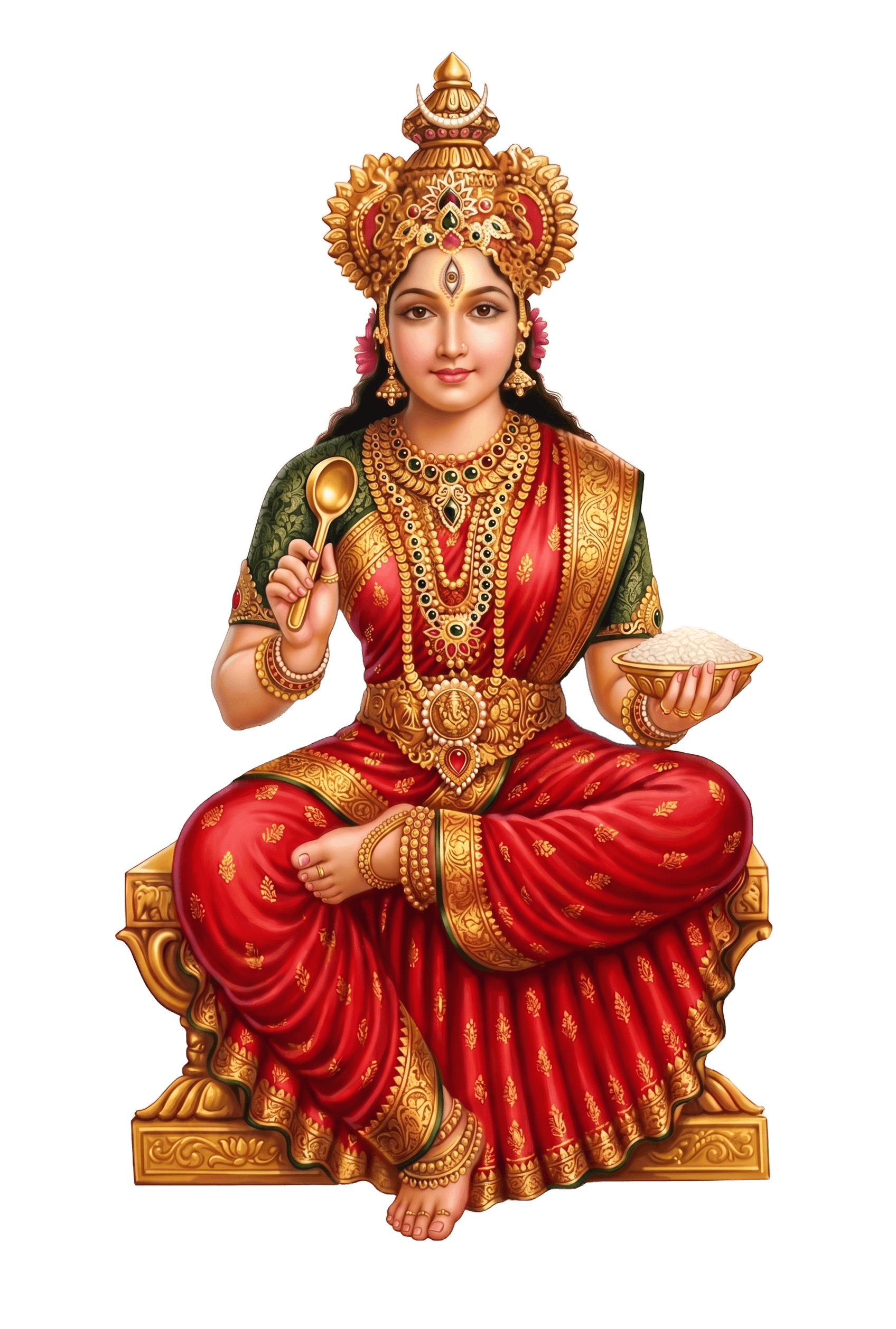
Annapoorneswari Devi Temple Valiyakunnamവലിയകുന്നം അന്നപൂർണേശ്വരി ദേവി ക്ഷേത്രം
A divine abode where the Mother Goddess showers her choicest blessings — where no prayer sent up to her has gone unanswered or fruitless.
Her celestial beauty is beyond description
Annapoorneswari Devi Temple stands testimony to the enchanting stories of those who migrated from this place 1500 years ago. Stories untold, told, and retold unfold from her. Devotees look up to the Mother Goddess as the most benevolent — their prayers sent up to her have neither become unanswered nor fruitless.
She leans on the tall areca nut tree after her morning shower, dressed in deep turmeric yellow, gazing into the golden mirror in her left hand — taking vermillion with her right ring finger to adorn her peaceful forehead, from where it shines like a flame.
Her charm is such that even the poet’s poet would fall short of words. Devotees have written much, in prose and poetry, to describe her mesmeric and divine beauty.
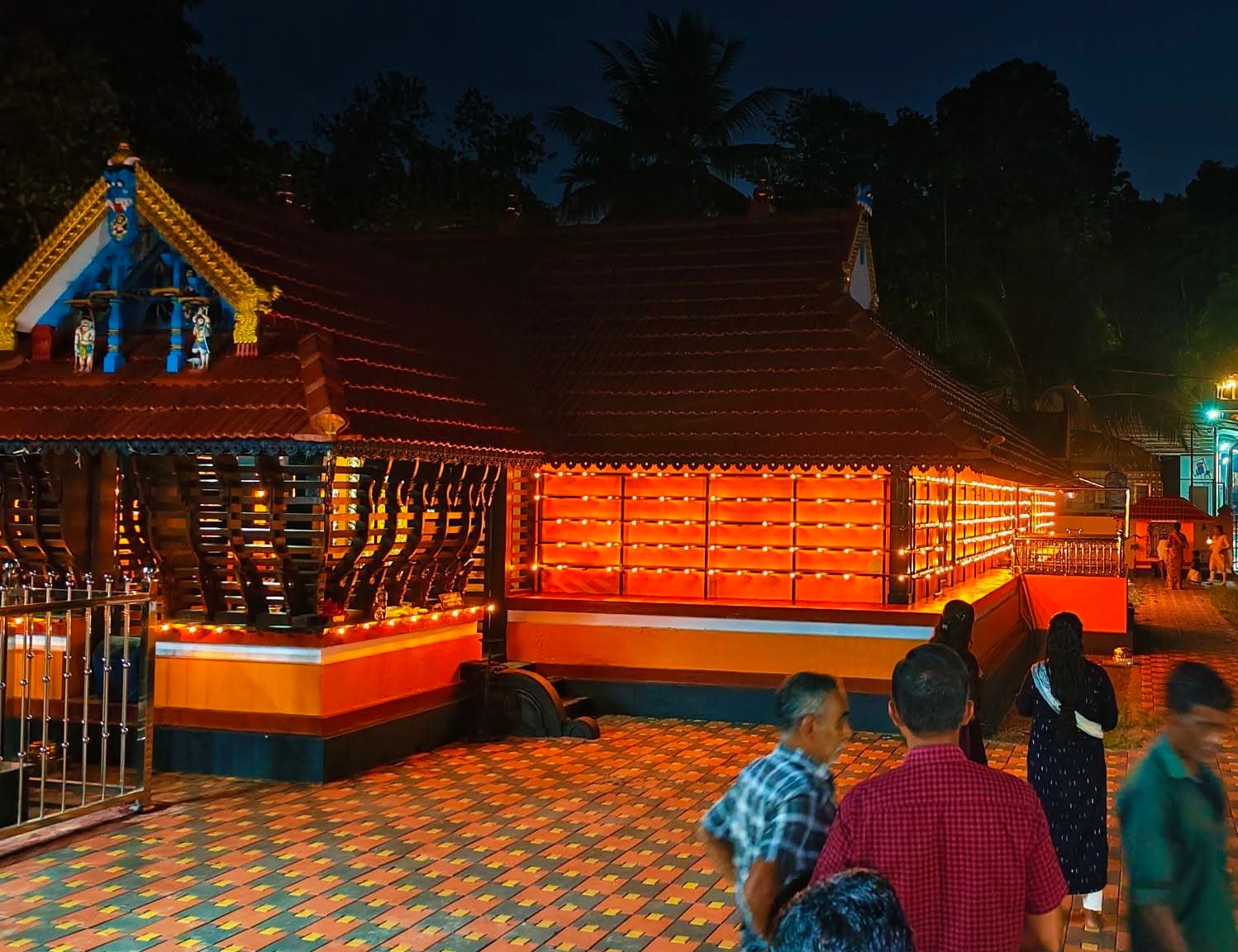
Rows of deepam glow along the shrine at dusk, as devotees gather in front of the temple.
From Nattakam, under a Karanavar’s umbrella
The divine abode of Kunnathukavu Devi begins at Nattakam — a small village in Kottayam — where she was the family deity of the Munjanattu family.
It is believed that one member of the Munjanattu family set off in search of arable land for cultivation and settled in this place. A staunch believer of Kunnathukavu Devi, he named the place Kunnathukavu.
Yet another belief travels alongside it: the almighty Devi came into Kunnathukavu together with a Karanavar of the Munjanattu family, under an umbrella held up by him. Devotees still believe that the present temple was constructed after his arrival — the appropriate place found through devaprasnam.
The daily rhythm of worship
Divasapooja timings, from the first abhishekam before dawn to the closing of the nada at night.
| Divasapooja | Time |
|---|---|
| Nataturappu Abhishekam | 05:15 AM |
| Ganapathihomam | 06:30 AM |
| Ushapooja | 07:30 AM |
| Uchapooja | 09:30 AM |
| Natayadakkal | 10:00 AM |
| Divasapooja | Time |
|---|---|
| Natathurakkal | 05:30 PM |
| Deeparadhana | 06:55 PM |
| Athazapooja | 07:30 PM |
| Natayatakkal | 07:40 PM |
Festivals & observances
The temple year, marked by its major celebrations, poojas and programs.
Vinayakachaturthi
Vijayadasami
Mandalamaholtsavam
Annadanam
Given on the “Pooram” naal of every Malayalam month.
Viseshalpooja
From the Malayalam “Thulam” month to the “Idavam” month.
Sapthaha Yagjam
Built in the Malayalam year 1160
The Kunnam Temple kanikkamandapam stands in the heart of Chalappally, beside the Ranny–Mallappally road. The land was donated by K.G Ramakrishnapilla of Kurangumpoykayil.
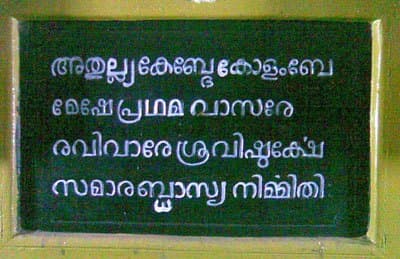
The slokam inscribed on the kanikkamandapam was composed by K.G Ramakrishnapilla & P.K Ramakrishnan Nair. Read together, the words fix the moment of its founding:
കൊല്ലവർഷം 1160-ആം ആണ്ട് മേടമാസം ഒന്നാം തീയതി ഞായറഴ്ച രാവിലെ അവിട്ടം നക്ഷത്രത്തിൽ നിർമാണം സമാരംഭിച്ചു.
Managed jointly, sustained by devotion
Established by dynasties of yore, the temple is jointly managed by the Munjanattu and Villyadathu dynasties. When these families found it difficult to run the temple with its former pomp and glory, they handed over the temple and its properties to the N.S.S Karayogam.
For the past four decades, the N.S.S Karayogam has carried the daily rituals of the temple.
Continue a 1500-year legacy of solace
For over 1500 years, our temple has offered solace and nurtured our community. Your contribution — however small — makes a big difference. Together, we ensure the temple thrives as a beacon of spirituality and community.
May Mother Annapoorneshwari bless you.
Donate directly
Transfer to the temple account